
CBSE – Central Board of Secondary Education
About CBSE
CBSE is a national-level board of education in India, responsible for public and private school education, managed by the Government of India. CBSE-affiliated schools follow the National Council of Educational Research and Training (NCERT) curriculum, designed to be student-friendly and focused on holistic development.
CBSE conducts major examinations, including the All India Secondary School Examination (AISSE) for Class 10 and the All India Senior School Certificate Examination (AISSCE) for Class 12. Instruction in CBSE schools is primarily offered in English or Hindi.
CBSE aims to provide top-quality education that helps students grow intellectually, socially, and culturally, nurturing them into future global leaders. The board has a widespread presence with over 24,000 affiliated schools across India and around 240 schools in 26 countries worldwide, covering government schools, private independent schools, and international schools.
CBSE Exam Dates
The Central Board of Secondary Education (CBSE) usually conducts its major examinations for Class 10 and Class 12 in February and March. The detailed schedule is typically released in December or January on the official website — cbse.gov.in — giving students ample time to prepare and plan.
Admit cards are generally issued a few weeks before exams commence. Schools distribute them to students, or they can be downloaded from the CBSE portal.
To aid in preparation, the CBSE website provides resources such as sample papers, previous year question papers, and marking schemes.
CBSE Exam Syllabus
For students in Classes 6 through 12, CBSE offers a thorough and organized curriculum designed to support all-encompassing education and ensure balanced development of cognitive, social, and emotional skills.
The CBSE syllabus is updated regularly to reflect new requirements and trends in education, ensuring students receive a current and relevant learning experience.
CBSE Exam Pattern 2025–26
Classes 1 to 8
| Type of Assessment | Description |
|---|---|
| Formative Assessment (FA) | Includes regular classwork, assignments, projects, and activities |
| Summative Assessment (SA) | Written exams conducted twice a year |
The weightage of formative and summative assessments varies across classes and schools, with an emphasis on overall development and skill acquisition rather than strictly examination-based evaluation.
Classes 9 and 10
Students are evaluated through both Formative and Summative Assessments. Summative Assessments account for 60% of the overall grade, while Formative Assessments account for the remaining 40%.
| Type of Assessment | Description |
|---|---|
| Formative Assessment (FA) | Includes regular classwork, assignments, projects, and activities |
| Summative Assessment (SA) | Written exams conducted twice a year |
| Internal Assessment | Subject-specific practical work, projects, and assignments |
Classes 11 and 12
CBSE has introduced major changes to the exam pattern for Classes 11 and 12 starting from the 2024–25 school year. The new pattern moves away from rote learning, focusing on conceptual understanding and real-life application.
Key Changes in the CBSE Exam Pattern
1. Competency-Based Questions — 50%
These questions assess students’ ability to apply knowledge practically. They include:
- Multiple-Choice Questions (MCQs)
- Case-based questions
- Source-based questions
- Other innovative question formats
2. Multiple Choice Questions (MCQs) — 20%
Traditional MCQs continue to be a part of the exam.
3. Constructed Response Questions — 30%
Short and long answer type questions remain, but their weightage has been reduced from 40% to 30%.
CBSE Study Materials
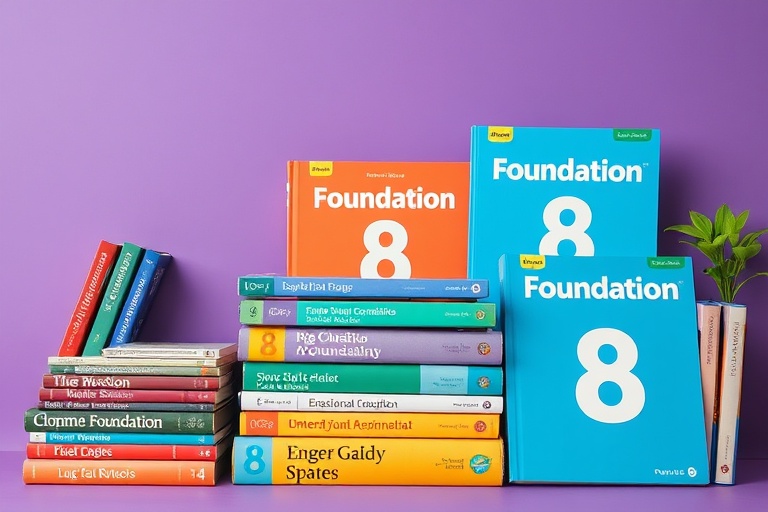
CBSE study material is essential for students as it aligns with the curriculum, ensuring thorough coverage of all topics. It offers structured learning, helps students build a solid foundation, and supports self-study across diverse learning styles through visual aids and real-life examples.
CBSE provides a variety of study materials on its official website:
Previous Year Question Papers
Solving previous year question papers is one of the most effective ways to understand the exam pattern and marking scheme, manage time during the exam, and identify and improve weak areas. Previous year papers for Class 10 and Class 12 are available on the official CBSE website — cbse.gov.in.
CBSE Board Exam Sample Papers
CBSE releases official sample papers for Class 10 and Class 12 so that students are aware of the exam pattern and marking scheme well in advance. Sample papers can be accessed on the official CBSE website.
CBSE Board Practice Questions
CBSE Board Practice Questions are designed to help students prepare thoroughly for board exams. These questions replicate the structure and difficulty level of the actual exam, covering a wide range of topics. Regularly practicing these questions helps students improve:
- Time management skills
- Problem-solving abilities
- Confidence and exam readiness
Best Courses for You






Share this with your friends
Browse Related Resources
Install App




Copyright © 2026 SpeEdLabs Pvt Ltd All Rights Reserved
